
Artificial Intelligence
How AI Search Is Changing Ecommerce SEO
July 22, 2026 · 3 min read · by qcvimarketing@qcverify.com
Discover how AI search is transforming ecommerce SEO and learn how to optimize product pages, structured data, content, and user experience to stay visible in Google AI Overviews, ChatGPT, Gemini, and future AI-powered search engines.
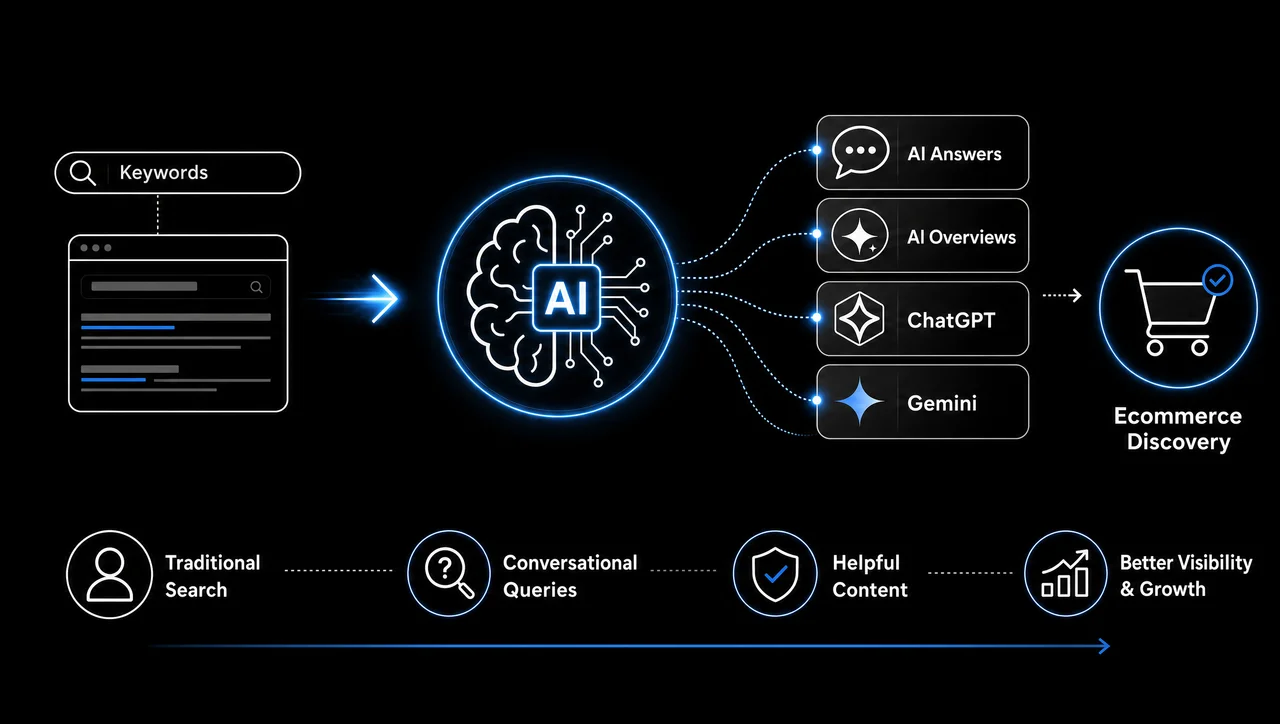
Search is changing, and ecommerce businesses need to keep up.
People are no longer searching with just a few keywords. They're asking complete questions in tools like Google AI Overviews, ChatGPT, Gemini, expecting quick, relevant answers before they even visit a website. This doesn’t mean SEO is disappearing. It means ecommerce SEO is evolving. Brands that create useful, trustworthy content will have a better chance of being discovered in both traditional search results and AI-powered search experiences.
Search Is Becoming More Conversational
Customers now search the way they speak. Instead of typing "wireless headphones," they might ask, "Which wireless headphones are best for remote work under $200?" AI search looks beyond keywords to understand the intent behind the question.
That’s why ecommerce brands should focus on answering real customer queries instead of relying only on keyword placement. Content that solves problems naturally has a better chance of being surfaced in AI-generated responses.
Make Product Pages More Helpful
A product page should do more than describe an item. Shoppers want answers before they buy. They want to know who the product is for, how it compares to other options, how to use it, and what to expect after purchasing.
Adding practical information, FAQs, sizing details, care instructions, or compatibility notes makes product pages more useful. It also gives search engines and AI platforms more context to understand your products.
Think Beyond Product Pages
Not every customer is ready to buy straight away. Some are comparing products, while others are still researching.
Creating buying guides, comparison articles, and educational blogs helps your website support every stage of the customer journey. This type of content also increases your chances of appearing when people ask detailed questions through AI search tools.
Help Search Engines Understand Your Website
Clear content is important, but so is the way your website is structured.
Using markup for products, reviews, pricing, availability, and FAQs helps search engines interpret your pages more accurately. It also improves the chances of your products appearing in rich search results and AI-generated answers. Small technical improvements can make a noticeable difference over time.
User Experience Still Matters
Getting visitors to your website is only part of the process. If pages load slowly or navigation feels confusing, people are likely to leave before taking action.
A fast, mobile-friendly website with a simple shopping experience keeps visitors engaged and supports better SEO performance. Good user experience benefits both search visibility and conversions.
Build Trust Across Your Website
AI search is designed to recommend reliable information. That’s why trust signals matter more than ever.
Genuine customer reviews, clear business information, transparent policies, and accurate product details all help build credibility. The more confidence people have in your brand, the more likely they are to engage with your business.
Getting Ready for AI Search
AI search isn’t replacing SEO. It’s changing how people discover information online. The brands that perform well will be the ones that answer customer questions clearly, publish helpful content, and keep their websites easy to use.
Instead of chasing algorithms, focus on creating content that genuinely helps shoppers make informed decisions. That’s the kind of content search engines and AI platforms are increasingly choosing to recommend.
Final Thoughts
Ecommerce SEO is no longer just about ranking for keywords. It’s about providing useful information that matches how people search today. By improving product pages, creating helpful content, maintaining a well-structured website, and building trust, ecommerce brands can stay visible as AI search continues to grow.
At QCVI Growth, we help ecommerce businesses adapt their SEO strategies for today's search landscape, combining technical SEO, content optimisation, and data-driven marketing to improve visibility and support long-term growth.
FAQ
Frequently asked questions
What is AI search in ecommerce?
Does AI search replace traditional SEO?
How can ecommerce brands prepare for AI search?
Why are product pages important for AI search?
Is keyword optimization still important?
Next step
Discuss this for your team
Book a strategy call and we'll apply this thinking to your accounts.